
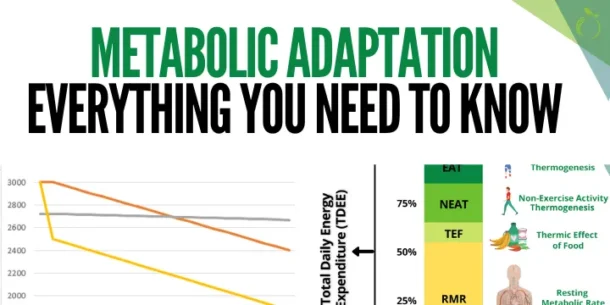
You’ve been eating less, moving more, and the scale was dropping — until suddenly, it stopped. Sound familiar? This frustrating plateau isn’t a failure of willpower. It’s metabolic adaptation dieting calorie restriction — a powerful survival response your body triggers the moment you enter a prolonged calorie restriction phase.
Metabolic adaptation dieting calorie restriction is the #1 reason fat loss stalls even when you’re doing everything right. In this guide, we’ll break down exactly what metabolic adaptation is, why dieting and calorie restriction trigger it, how to detect it early, and — most importantly — how to overcome it for good using smart TDEE strategies.
Table of Contents
What Is Metabolic Adaptation?
Metabolic adaptation (also called adaptive thermogenesis) is the process by which your body lowers its Total Daily Energy Expenditure (TDEE) in response to prolonged calorie restriction. In simple terms: the longer you diet, the fewer calories your body burns — even at rest.
Metabolic adaptation dieting calorie restriction works as an evolutionary survival mechanism. When your ancestors faced food scarcity, their bodies became more efficient to keep them alive. Today, that same mechanism works directly against modern dieters who rely on calorie restriction to lose fat.
How Metabolic Adaptation Differs From Normal Weight Loss
When you lose weight, your TDEE naturally drops because you have less body mass to maintain — this is expected and normal. But metabolic adaptation from dieting is the extra suppression in energy expenditure beyond what weight loss alone would predict.
Research shows this additional calorie burn reduction from metabolic adaptation and calorie restriction can range from 100 to 500+ calories per day, making continued fat loss significantly harder over time.
How Calorie Restriction Triggers Metabolic Adaptation
1. Hormonal Shifts
Prolonged calorie restriction disrupts key metabolic hormones:
- Leptin (the satiety hormone) drops sharply, signaling your brain to slow metabolism and increase hunger.
- Thyroid hormones (T3) decrease, directly reducing your metabolic rate.
- Cortisol rises, promoting muscle breakdown and fat retention.
- Ghrelin (the hunger hormone) surges, making cravings nearly impossible to ignore.
2. Reduction in Non-Exercise Activity Thermogenesis (NEAT)
NEAT includes all the small movements you make throughout the day — fidgeting, walking, posture adjustments. During calorie restriction, your body unconsciously reduces NEAT, which can account for 200–400 calories less burned per day without you even realizing it.
3. Decreased Thermic Effect of Food (TEF)
Since you’re eating less food, your body burns fewer calories simply digesting it. This further widens the metabolic gap.
4. Muscle Loss
Severe calorie restriction — especially without adequate protein and resistance training — leads to muscle loss. Since muscle is metabolically active tissue, losing it directly lowers your resting metabolic rate (RMR).
Signs You’re Experiencing Metabolic Adaptation
Not sure if metabolic adaptation is stalling your progress? Watch for these signs:
- Weight loss plateau despite maintaining a calorie deficit
- Constant fatigue and low energy, even on rest days
- Feeling cold all the time (a classic sign of slowed thyroid function)
- Increased hunger and cravings beyond what’s expected
- Loss of motivation and brain fog
- Strength decreasing in the gym despite consistent training
If you’re checking multiple boxes, your metabolism has likely adapted to your current calorie intake.
The Role of TDEE in Understanding Metabolic Adaptation
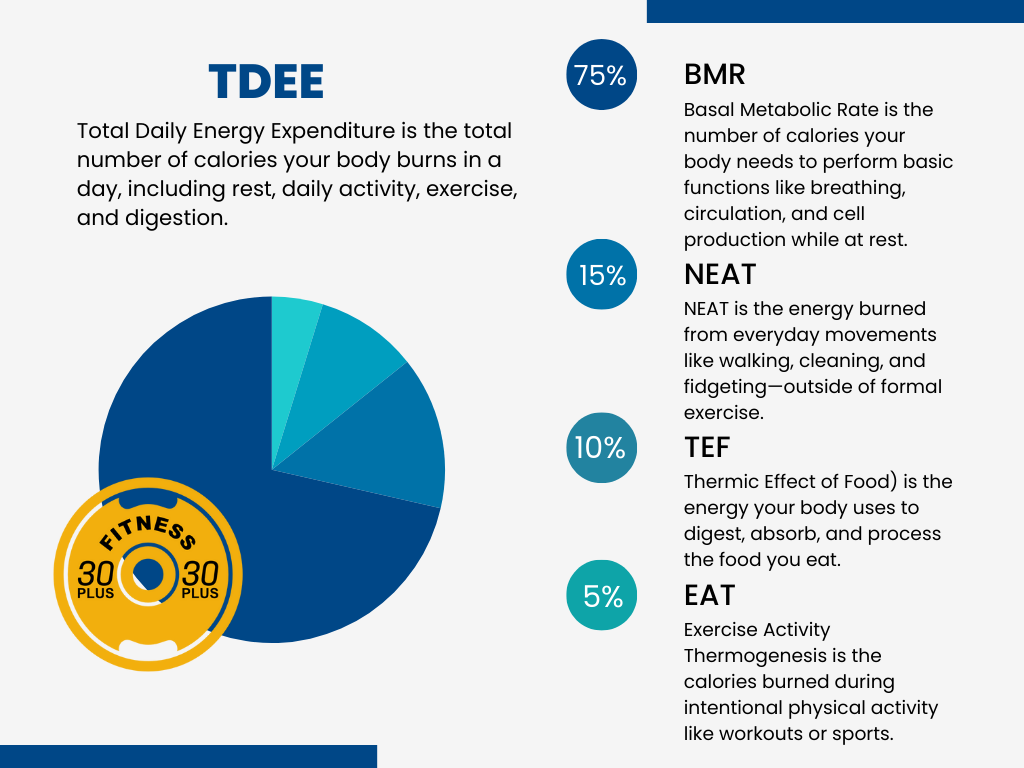
Your Total Daily Energy Expenditure (TDEE) is the total number of calories your body burns in a day. It includes:
- BMR – Basal Metabolic Rate (calories burned at rest)
- NEAT – Non-Exercise Activity Thermogenesis
- TEF – Thermic Effect of Food
- EAT – Exercise Activity Thermogenesis
Metabolic adaptation from calorie restriction reduces all four of these components simultaneously. This is exactly why tracking your TDEE accurately — and recalculating it regularly during a diet — is the most critical tool for fighting metabolic adaptation
Use our TDEE Calculator to find your current Total Daily Energy Expenditure and recalibrate your calorie targets as your weight changes.
When your body adapts, your old TDEE estimate becomes outdated. Dieters who don’t adjust their intake accordingly end up eating at maintenance — not a deficit — without knowing it.
How Long Does Metabolic Adaptation Last After Dieting?
This is one of the most searched questions around metabolic adaptation dieting calorie restriction. The honest answer: it depends on how long and how aggressively you’ve been restricting calories.
- Short-term metabolic adaptation (weeks of dieting): Mostly hormonal and NEAT-driven; largely reversible within days to weeks of returning to maintenance calories
- Long-term metabolic adaptation (months to years of calorie restriction dieting): Harder to reverse, involving structural changes to muscle mass and hormonal set points. Can persist for 12+ months after a diet ends — as shown in the landmark Biggest Loser study on long-term metabolic adaptation
The good news: with the right strategy, metabolic adaptation dieting calorie restriction effects can be fully reversed — and your metabolic rate can even be rebuilt higher than before.
How to Overcome Metabolic Adaptation Dieting: 7 Proven Strategies
1. Take a Diet Break to Reset Metabolic Adaptation
A diet break is a planned period (typically 1–2 weeks) of eating at maintenance calories — pausing calorie restriction to allow hormonal recovery. Research shows diet breaks help:
- Restore leptin and thyroid hormones suppressed by calorie restriction
- Slow the muscle loss that accelerates metabolic adaptation during dieting
- Improve long-term diet adherence and psychological wellbeing
This is not quitting your diet — it’s a strategic tool to fight metabolic adaptation.
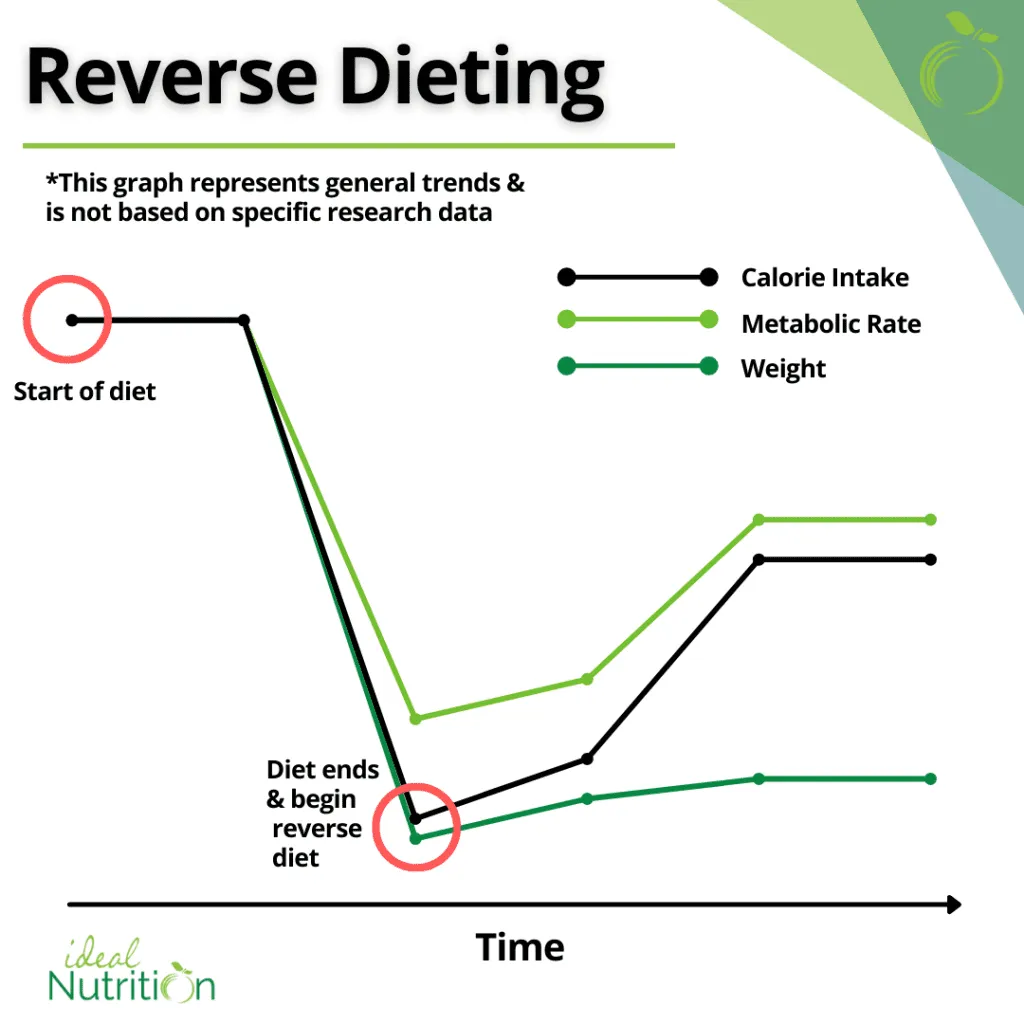
2. Use Reverse Dieting to Rebuild Your Metabolism
Reverse dieting is the gradual process of increasing calorie intake after a period of restriction — typically by 50–100 calories per week. The goal is to slowly raise your TDEE and reverse metabolic adaptation without gaining significant fat.
Reverse dieting after calorie restriction dieting helps:
- Restore hormonal balance disrupted by metabolic adaptation
- Rebuild NEAT that was lost during dieting
- Increase metabolic capacity before the next calorie restriction phase
Calculate your maintenance calories with our TDEE Calculator — your starting point for a successful reverse diet after metabolic adaptation.
3. Prioritize Protein to Fight Metabolic Adaptation During Calorie Restriction
Protein is the most thermogenic macronutrient — 20–30% of its calories are burned during digestion. High protein intake also directly preserves lean muscle mass during calorie restriction, slowing the muscle loss that worsens metabolic adaptation dieting. Aim for 0.7–1g of protein per pound of bodyweight during your diet.
Understand how your macros affect your calorie needs using our TDEE and Macro Calculator.
4. Include Resistance Training During Calorie Restriction
Resistance training is the single best tool to preserve metabolic tissue during calorie restriction dieting — directly fighting metabolic adaptation at the source. Muscle mass directly supports a higher RMR. Aim for 3–5 sessions per week of progressive resistance training.
5. Cycle Your Calories to Prevent Full Metabolic Adaptation
Instead of eating the same calorie level every day during dieting, cycle between higher-calorie days (training days) and lower-calorie days (rest days). Calorie cycling helps prevent the body from fully locking into metabolic adaptation to a single calorie level while maintaining an overall weekly deficit.
6. Sleep and Stress Management Counter Metabolic Adaptation
Poor sleep and chronic stress elevate cortisol — the hormone that accelerates both muscle breakdown and fat retention, worsening metabolic adaptation after dieting. Aim for 7–9 hours of quality sleep and incorporate stress-reduction practices like walking, meditation, or breathing exercises during your calorie restriction phase.
7. Recalculate Your TDEE Regularly to Track Metabolic Adaptation
As your body weight and composition change during dieting, your TDEE changes too — especially when metabolic adaptation calorie restriction sets in. Dieters who never update their calorie target are often unknowingly eating at maintenance, not a deficit.
Recalculate your TDEE every 4–6 weeks during your diet to ensure your calorie restriction is real — not cancelled out by metabolic adaptation.
“The good news is that metabolic adaptation dieting calorie restriction is not permanent — these 7 strategies can help you break through and restore your metabolic rate”
Metabolic Adaptation vs. Weight Loss Plateau: What’s the Difference?
| Factor | Weight Loss Plateau | Metabolic Adaptation Dieting |
|---|---|---|
| Cause | Water retention, miscalculated calorie intake | Physiological reduction in energy expenditure from calorie restriction |
| Duration | Short-term (days–weeks) | Long-term (weeks–months) |
| Fix | Recount calories, reduce sodium | Diet break, reverse dieting, TDEE recalculation |
| Hormonal involvement | Minimal | Significant — leptin, thyroid, cortisol all suppressed |
| TDEE impact | Minimal | Major — can reduce TDEE by 100–500+ calories/day |
Frequently Asked Questions (FAQs)
Q1: What is metabolic adaptation dieting in simple terms?
Q2: How do I know if calorie restriction has caused metabolic adaptation?
Q3: Can metabolic adaptation from dieting be reversed?
Q4: How long does metabolic adaptation last after calorie restriction dieting?
Q5: Does eating more reverse metabolic adaptation?
Q6: How does calorie restriction cause metabolic adaptation differently than regular weight loss?
Conclusion
Metabolic adaptation dieting calorie restriction is one of the most real, well-researched, and overlooked reasons people fail to achieve lasting fat loss. When calorie restriction goes on too long without strategic breaks, your body fights back — slashing energy expenditure, suppressing hormones, and making every calorie count more.
The solution isn’t to eat less and push harder through metabolic adaptation. It’s to work smarter: take planned diet breaks, practice reverse dieting, protect your muscle mass with protein and strength training, and — critically — keep your TDEE recalculated as your body changes during dieting.
Your metabolism is not broken. It’s adapting to your calorie restriction. And with the right tools, you can adapt right back.
Ready to stop guessing and start beating metabolic adaptation? Use the DailyTDEE Calculator to find your exact daily calorie needs — updated for your current weight, activity level, and dieting phase. Whether you’re in calorie restriction, on a diet break, or reverse dieting your way out of metabolic adaptation, your TDEE is the foundation of every smart decision you make.