
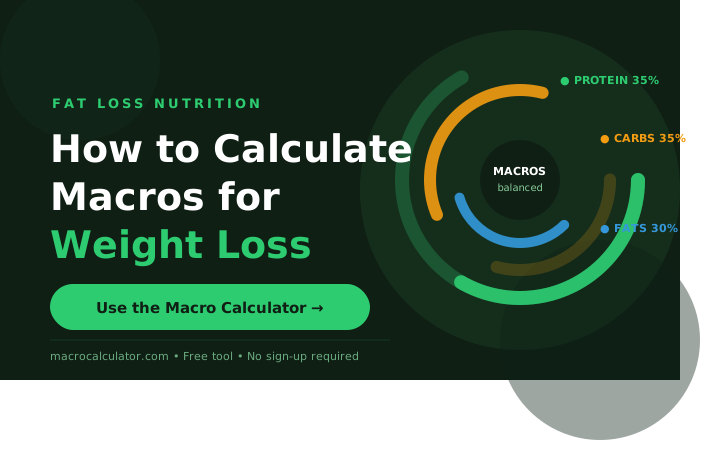
Struggling to lose weight despite eating “healthy”? The problem might not be what you eat — it’s how much of each macronutrient you’re consuming. Using a macro calculator for fat loss takes the guesswork out of dieting and gives you a personalized roadmap to shed fat while preserving lean muscle.
In this guide, you’ll learn exactly how to calculate your macros for weight loss, what ratios work best for fat burning, and how to use a macro calculator to simplify your nutrition plan — whether you’re a complete beginner or a seasoned fitness enthusiast.
Table of Contents
What Are Macros?
Macros — short for macronutrients — are the three main nutrients your body uses for energy:
- Protein – Builds and repairs muscle tissue; keeps you full
- Carbohydrates – Primary energy source for the brain and muscles
- Fats – Supports hormones, brain health, and fat-soluble vitamins
Every food you eat contains a combination of these three macros. Tracking them gives you far more precision than simply counting calories.
Why Use a Macro Calculator for Fat Loss?
A generic “eat less, move more” approach often leads to muscle loss alongside fat loss. A macro calculator for fat loss solves this by calculating your specific needs based on:
- Age, gender, height, and weight
- Activity level (sedentary, lightly active, very active)
- Goal (fat loss, muscle gain, maintenance)
- Body fat percentage (optional but more accurate)
The result? A daily gram target for protein, carbs, and fat tailored to you — not a generic chart from a magazine.
How to Calculate Your Macros for Weight Loss: Step-by-Step:
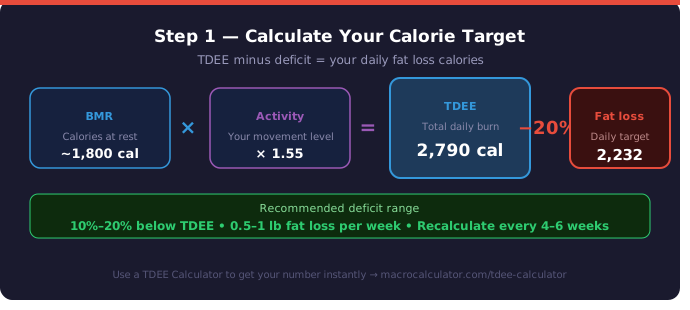
Step 1: Calculate Your TDEE (Total Daily Energy Expenditure)
Before setting macros, you need to know how many calories your body burns each day. This is your TDEE.
TDEE = BMR × Activity Multiplier
Your BMR (Basal Metabolic Rate) is calculated using the Mifflin-St Jeor formula:
- Men: BMR = (10 × weight in kg) + (6.25 × height in cm) − (5 × age) + 5
- Women: BMR = (10 × weight in kg) + (6.25 × height in cm) − (5 × age) − 161
Activity Multipliers:
| Activity Level | Multiplier |
|---|---|
| Sedentary (desk job, no exercise) | × 1.2 |
| Lightly active (1–3 days/week) | × 1.375 |
| Moderately active (3–5 days/week) | × 1.55 |
| Very active (6–7 days/week) | × 1.725 |
| Extra active (athlete, physical job) | × 1.9 |
Step 2: Set a Calorie Deficit for Fat Loss
For sustainable fat loss, aim for a 10–20% calorie deficit below your TDEE.
Example: If your TDEE is 2,500 calories, a 20% deficit = 2,000 calories/day.
Avoid going below 1,200 calories (women) or 1,500 calories (men) without medical supervision, as this can lead to nutrient deficiencies and muscle loss.
Step 3: Set Your Macro Ratios
Once you have your calorie target, distribute them across the three macros. Here are the most effective ratios for fat loss:
Best Macro Split for Fat Loss
| Macro | % of Calories | Calories per Gram |
|---|---|---|
| Protein | 30–40% | 4 cal/g |
| Carbohydrates | 25–40% | 4 cal/g |
| Fats | 20–35% | 9 cal/g |
Recommended Starting Point for Fat Loss:
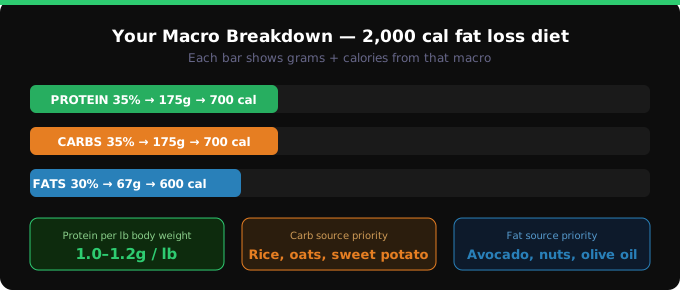
- Protein: 35%
- Carbohydrates: 35%
- Fats: 30%
Step 4: Convert Percentages to Grams
Let’s use a real example — a 2,000-calorie fat loss diet:
| Macro | % | Calories | Grams |
|---|---|---|---|
| Protein | 35% | 700 cal | 175g |
| Carbohydrates | 35% | 700 cal | 175g |
| Fats | 30% | 600 cal | 67g |
This is exactly what a macro calculator for fat loss does automatically — saving you the math.
How Much Protein Do You Need for Fat Loss?
Protein is the most important macro for fat loss because it:
✅ Preserves lean muscle while in a calorie deficit ✅ Keeps you fuller for longer (reduces cravings) ✅ Has a high thermic effect (burns more calories during digestion)
General Protein Guidelines for Fat Loss:
- Minimum: 0.7g per pound of body weight
- Optimal: 1.0–1.2g per pound of body weight (especially if you lift weights)
Example: A 160 lb person should aim for 160–192g of protein per day.
Carbs and Fats: How to Balance Them:
After setting protein, split your remaining calories between carbs and fats based on your preferences and lifestyle:
High-Carb, Lower-Fat (Good for active individuals)
- Carbs: 40% | Fats: 20–25%
- Best for: Athletes, people who train 5+ days/week
Moderate Carb & Fat (Most balanced approach)
- Carbs: 35% | Fats: 30%
- Best for: Most people with a moderate activity level
Low-Carb, Higher-Fat (Keto-style)
- Carbs: 5–10% | Fats: 60–70%
- Best for: People who are insulin-resistant or prefer satiety over energy
How to Use a Macro Calculator for Fat Loss:
A good macro calculator for fat loss does all the heavy lifting for you. Here’s how to use one:
- Enter your stats – height, weight, age, gender
- Choose your activity level
- Select your goal – fat loss / cutting
- Get your daily macro targets in grams
- Track your food using apps like MyFitnessPal, Cronometer, or Lose It!
💡 Pro Tip: Re-calculate your macros every 4–6 weeks as your weight changes, or whenever your activity level shifts.
Common Mistakes When Tracking Macros for Fat Loss:
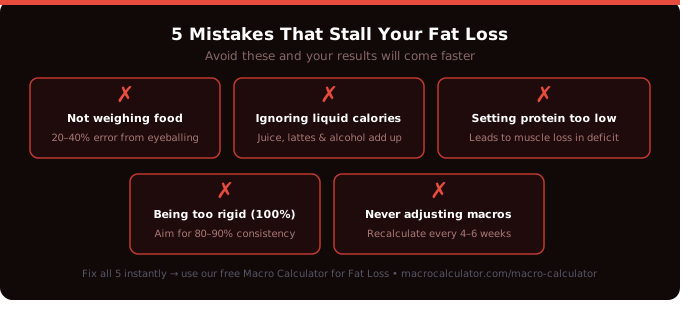
❌ Not Weighing Your Food
Eyeballing portions leads to 20–40% inaccuracy. Use a digital food scale.
❌ Ignoring Liquid Calories
Drinks like juice, lattes, and alcohol contain macros that add up fast.
❌ Setting Protein Too Low
Low protein = muscle loss during a deficit. Always prioritize protein first.
❌ Being Too Rigid
Life happens. Aim to hit your macros 80–90% of the time rather than stressing over perfection.
❌ Not Adjusting Over Time
As you lose weight, your TDEE decreases. Recalculate every 4–6 weeks.
Sample Meal Plan Using a Macro Calculator for Fat Loss:
Daily Target: 2,000 calories | 175g Protein | 175g Carbs | 67g Fat
Breakfast
- 4 egg whites + 2 whole eggs scrambled
- 1 cup oats with berries
- Black coffee
Lunch
- 6oz grilled chicken breast
- 1 cup brown rice
- Mixed greens salad with olive oil dressing
Snack
- 1 cup Greek yogurt (0% fat)
- 1 banana
Dinner
- 6oz salmon
- 1 medium sweet potato
- Steamed broccoli
Evening Snack
- 1 scoop whey protein shake
- 1 tbsp peanut butter
FAQs: Macro Calculator for Fat Loss
Q1: What is the best macro ratio for fat loss?
Q2: Should I eat fewer carbs or fewer fats to lose weight?
Q3: How accurate are macro calculators for fat loss?
Q4: Can I lose fat without tracking macros?
Q5: How long does it take to see results when tracking macros?
Conclusion:
Calculating your macros for weight loss doesn’t have to be complicated. By using a macro calculator for fat loss, you get a personalized, science-backed nutrition plan that helps you burn fat, preserve muscle, and actually enjoy eating — without endless restriction.
Start by calculating your TDEE, set a 10–20% calorie deficit, prioritize protein, and let a macro calculator do the rest. Track consistently, adjust every few weeks, and the results will follow.
Ready to stop guessing and start losing? Use our free Macro Calculator for Fat Loss to get your personalized daily macro targets in seconds. No email required — just enter your stats and get your custom plan instantly.