
Table of Contents
The calories you burn just by eating:
Your body burns calories to digest food. Every meal you eat costs energy to break down, absorb, and use. That cost is called the thermic effect of food, or TEF — and if you want the thermic effect of food TEF explained in plain terms, you’re in the right place.
While TEF is the smallest piece of your total calorie burn, it’s real, measurable, and worth understanding if you’re tracking your TDEE seriously.
What Is the Thermic Effect of Food (TEF)?
The thermic effect of food, commonly abbreviated as TEF, is the increase in your metabolic rate that happens after you eat. According to Examine.com’s research review on TEF, the thermic effect of food TEF represents about 10% of the caloric intake of healthy adults eating a standard mixed-macronutrient diet — though your actual number depends on age, meal timing, and macronutrient composition.
Your digestive system performs real physical work when processing food: breaking it into smaller molecules, transporting nutrients across your gut lining, and converting macronutrients into usable energy or stored tissue. All of that takes energy — and that energy cost is what we call the thermic effect of food TEF.
On average, the thermic effect of food TEF accounts for roughly 8–15% of total daily energy expenditure for most people. So if you burn 2,500 calories a day, somewhere between 200 and 375 of those calories come purely from digesting your food.
Understanding the thermic effect of food TEF explained fully means knowing where it sits inside your bigger calorie picture — which brings us to TDEE.
How the Thermic Effect of Food (TEF) Fits Into Your TDEE:
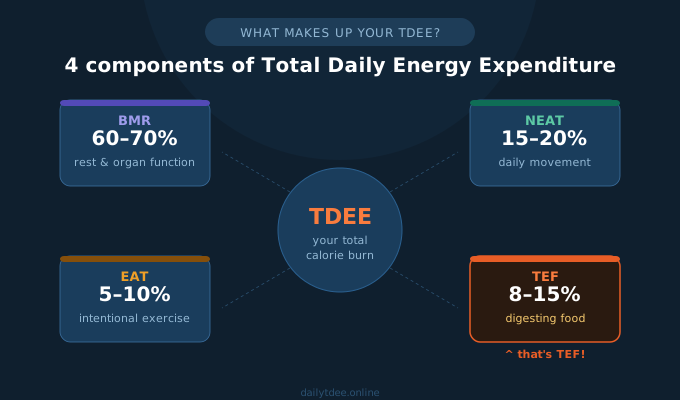
Your Total Daily Energy Expenditure (TDEE) has four components. The thermic effect of food TEF is one of them:
- BMR (Basal Metabolic Rate): calories burned at rest just to keep you alive — see TDEE vs BMR: which number matters
- NEAT (Non-Exercise Activity Thermogenesis): all movement outside structured workouts
- EAT (Exercise Activity Thermogenesis): intentional exercise sessions
- TEF (Thermic Effect of Food): calories your body burns digesting and processing food
As Wikipedia’s overview of Specific Dynamic Action notes, the thermic effect of food TEF is one of the three main components of metabolism alongside resting metabolic rate and exercise activity. Most TDEE calculators fold TEF into the activity multiplier — which is fine for everyday use — but knowing how the thermic effect of food TEF actually works helps you make smarter food choices.
Use the free TDEE Calculator at dailytdee.online to get your full maintenance calories with thermic effect of food TEF already factored in.
TEF by Macronutrient: The Numbers That Actually Matter
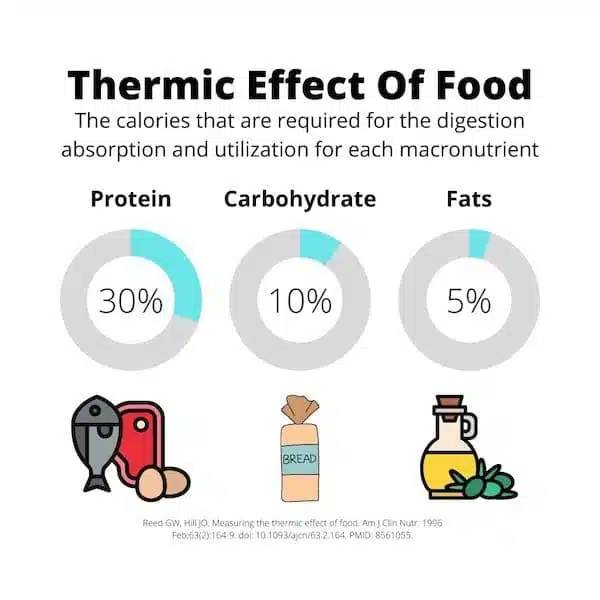
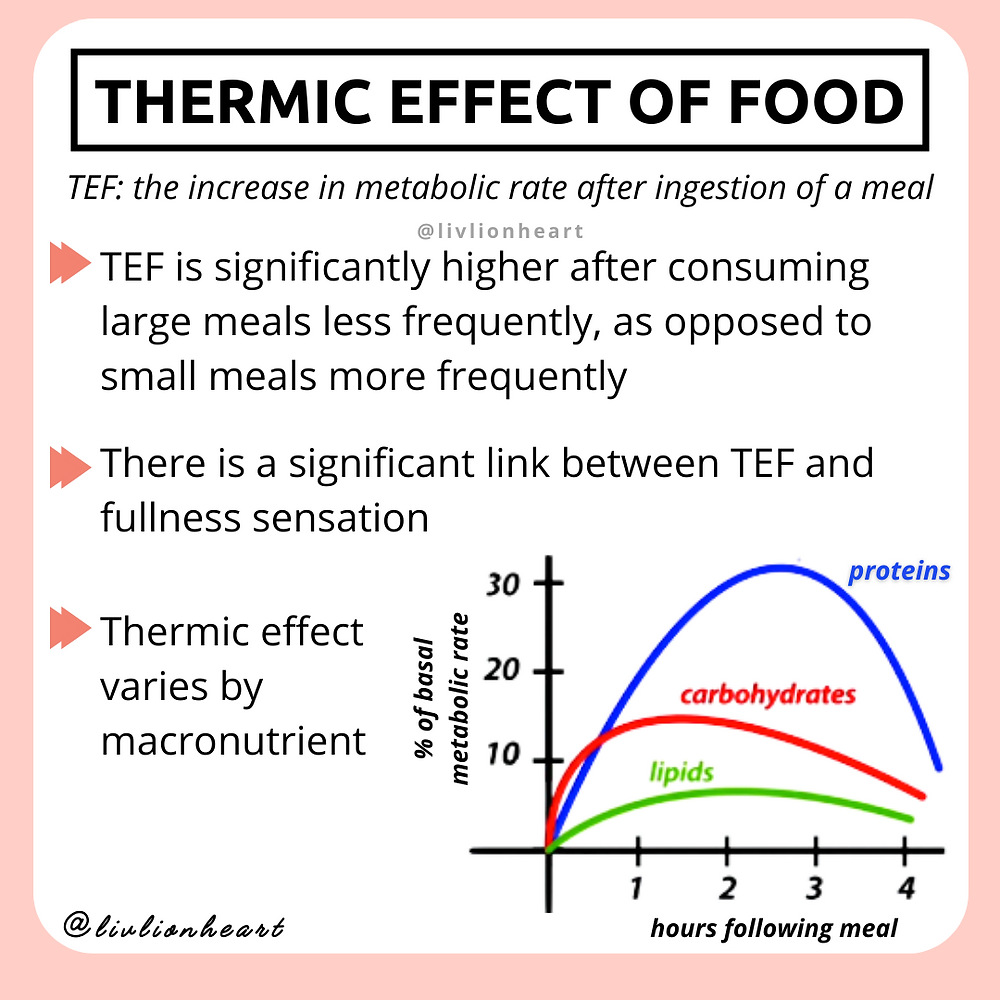
Not all calories digest the same way. The thermic effect of food TEF varies significantly by macronutrient — and this is the core of the thermic effect of food TEF explained. According to Examine.com’s TEF database, each macronutrient carries a distinct thermic cost expressed as a percentage of the energy it provides.
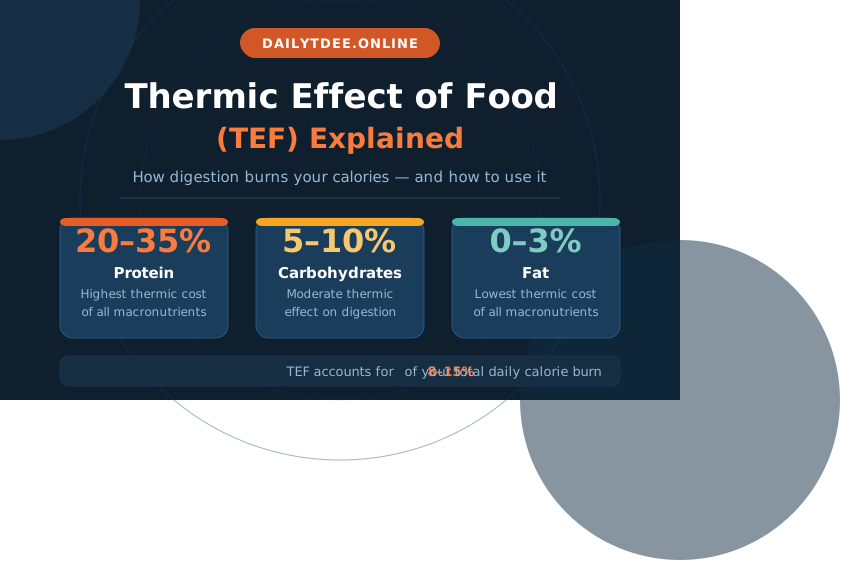
Protein: 20–35% Thermic Effect of Food TEF
Protein has by far the highest thermic effect of food TEF. Eat 100 calories of protein and your body burns roughly 20–35 of those calories just processing it. A PubMed study on TEF, exercise, and total energy expenditure in active females found that a high-protein meal elicited a 30.39% greater increase in TEF compared to a low-protein meal — and a 98.15% greater increase compared to a fasted state.
This is a real, meaningful effect. It’s one of several reasons high-protein diets produce better fat loss results than lower-protein diets at the same calorie intake — and it’s why the thermic effect of food TEF matters when structuring your macros.
Carbohydrates: 5–10% Thermic Effect of Food TEF
Carbs carry a moderate thermic effect of food TEF. Simple sugars digest fast and cost very little energy. Complex carbohydrates with more fiber take more work. The range sits between 5 and 10% of total carb calories.
Fat: 0–3% Thermic Effect of Food TEF
Fat has the lowest thermic effect of food TEF of any macronutrient. Dietary fat doesn’t need much conversion before being stored, which is why its thermic cost is so low. Eat 100 calories of fat and your body spends only about 2–3 calories digesting it.
Fiber and Alcohol
Fiber doesn’t digest fully, so its effective calorie contribution is lower than standard carb estimates suggest. It also slows gastric emptying and adds some thermic effect of food TEF overhead.
Alcohol carries a thermic effect of food TEF of around 15–20%, but that doesn’t make it a dietary tool. The calories are still real, and alcohol significantly disrupts fat oxidation.
Does the Thermic Effect of Food TEF Change What You Should Eat?
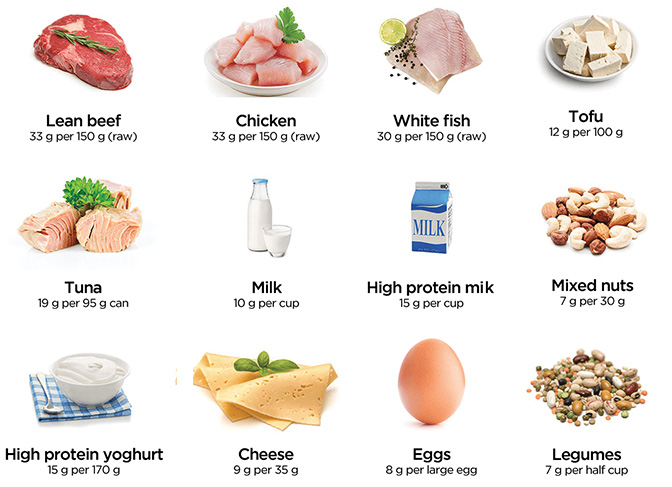
Yes — and this is where the thermic effect of food TEF explained becomes truly actionable.
High-Protein Diets Burn More Calories from TEF
If two people eat 2,000 calories but one gets 30% from protein and the other gets 15%, the high-protein person burns more calories through the thermic effect of food TEF alone. A common estimate is that shifting from a low-protein to a high-protein diet raises daily TEF by 80–100 calories. Small, but real — and it adds up over weeks.
To know exactly how many calories you need with a high-protein split, use the TDEE calculator and set your goal to fat loss or muscle gain.
Whole Foods Have a Higher Thermic Effect of Food TEF Than Processed Foods
Processing food does some of the digestive work for you. Refined carbohydrates, ultra-processed snacks, and liquid calories digest faster and with less thermic effect of food TEF cost than whole foods with intact fiber and cellular structure.
A 2010 study in Food & Nutrition Research found that people burned nearly twice as many calories digesting a whole food meal compared to a processed version with the same calorie count. This is the thermic effect of food TEF in action — 100 calories from oats and 100 calories from white bread don’t cost your body the same energy to process.
Meal Frequency Doesn’t Affect Total TEF
One persistent myth is that eating more meals raises your thermic effect of food TEF and total calorie burn. The research doesn’t support this. TEF is proportional to total calories and macronutrient content, not how you split them across the day. Eat 2,500 calories in 2 meals or 6, and your daily thermic effect of food TEF ends up roughly the same.
Thermic Effect of Food TEF and Weight Loss: What’s Actually Useful:
The thermic effect of food TEF isn’t a weight loss hack on its own. But it matters at the margins — and margins matter in a calorie deficit. Learn more about how many calories to lose weight.
Protein is the biggest lever for TEF. Eating 0.7–1g of protein per pound of bodyweight gives you a meaningful thermic effect of food TEF advantage — not just for preserving muscle, but for the higher thermic cost of digestion itself.
Whole foods matter more than people think. A diet built around whole grains, lean meats, vegetables, legumes, and fruit will produce a higher thermic effect of food TEF than the same calorie count from processed food. Not dramatically higher, but meaningfully so over time.
Liquid calories have the lowest thermic effect of food TEF. Smoothies, juices, and liquid meal replacements digest faster and require less enzymatic work. Use them strategically, not as meal staples.
If you’re aiming to lose exactly 1 pound per week, see our guide on how many calories to lose 1 pound a week — where TEF plays a supporting role.
How to Calculate the Thermic Effect of Food TEF in Your TDEE:
Most TDEE calculators — including the one at dailytdee.online — don’t ask for TEF separately. It’s already estimated within the activity multiplier.
General rule for calculating the thermic effect of food TEF: Multiply your total calorie intake by 0.10 (for a mixed, average diet).
| Diet Type | Thermic Effect of Food TEF % |
|---|---|
| High-protein (30%+ of calories) | 12–13% |
| Mixed / average diet | ~10% |
| Processed carbs & fat dominant | 6–8% |
At 2,500 calories/day, your thermic effect of food TEF is approximately 250 calories on a mixed diet — and up to 325 calories on a high-protein plan.
The TDEE Calculator formula already bakes this in, so the number you get is your full maintenance target with thermic effect of food TEF included.
Thermic Effect of Food TEF: Common Misconceptions:
“Spicy food burns way more calories.”
Capsaicin does boost the thermic effect of food TEF slightly — around 10–50 extra calories per meal. Meaningful over time if you eat spicy food consistently, but not dramatic.
“Eating more often speeds up your metabolism through TEF.”
Covered above. Meal frequency doesn’t move the thermic effect of food TEF needle. Total calories and macros do.
“High TEF makes protein meals basically free.”
Not quite. Protein’s thermic effect of food TEF means you net fewer calories from it — but 200 calories of protein still contributes roughly 130–160 net calories after TEF. Track the gross number like everyone else.
Thermic Effect of Food TEF for Women vs Men — Does It Differ?
The thermic effect of food TEF is broadly similar between men and women when expressed as a percentage of total calories. However, because men typically have higher muscle mass and a higher TDEE overall, the absolute calorie burn from TEF tends to be higher for men simply because they eat more total calories.
Women following a high-protein diet can absolutely use the thermic effect of food TEF to their advantage — especially during a cut. See our dedicated TDEE calculator for women for a personalized maintenance number.
Frequently Ask Question:
Q1: What percentage of calories does the thermic effect of food TEF burn?
Q2: Does the thermic effect of food TEF help with weight loss?
Q3: Which macronutrient has the highest thermic effect of food TEF?
Q4: Does meal timing affect the thermic effect of food TEF?
Q5: Should I track the thermic effect of food TEF separately in my TDEE?
Now that you have the thermic effect of food TEF explained in full, the practical takeaways are simple:
✅ Eat enough protein — aim for 0.7–1g per pound of bodyweight to maximize the thermic effect of food TEF ✅ Choose whole foods — they carry a higher thermic effect of food TEF than processed alternatives ✅ Be strategic with liquid calories — the thermic effect of food TEF for liquids is the lowest of any food type ✅ Don’t stress meal frequency — it doesn’t change your total thermic effect of food TEF
None of this replaces accurate calorie tracking. The thermic effect of food TEF is a multiplier on top of your food choices, not a substitute for knowing your numbers.
Use the free TDEE Calculator at dailytdee.online to find your maintenance calories with the thermic effect of food TEF already baked in. Then build your macro split around that number. Once protein is prioritized and whole foods make up most of your diet, the thermic effect of food TEF works in your favor automatically.
👉 Curious how protein intake changes your net calorie burn through the Thermic effect of food TEF Explained, Plug your numbers into the TDEE calculator and run the math — the difference between a 15% and 30% protein diet is larger than most people expect.