

If you’re a man over 40 and feel like your body has “changed” — you’re not imagining it.
You’re eating the same way you did at 32. Maybe even less. But the scale keeps creeping up, the midsection won’t budge, and the energy isn’t what it used to be.
The problem isn’t willpower. It’s math — specifically, your TDEE (Total Daily Energy Expenditure).
For men over 40, the TDEE men over 40 calorie decrease with age is one of the most overlooked reasons weight creeps up despite eating the same or less than before.
Your TDEE — the total number of calories your body burns every single day — is not a fixed number. It declines with age, and for men over 40, the drop is real, measurable, and often overlooked.
This guide explains exactly why the TDEE men over 40 calorie decrease with age happens, how much the drop actually is, and — most importantly — what you can do about it to stay lean, energetic, and strong after 40.
Table of Contents
What Is TDEE and Why Does It Matter After 40?
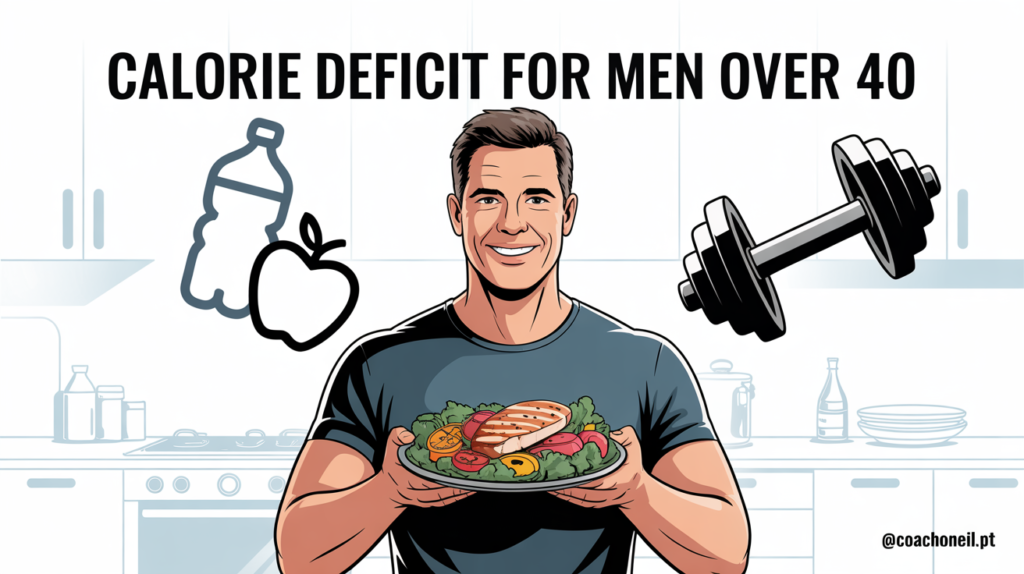
TDEE stands for Total Daily Energy Expenditure. It’s the total number of calories your body burns in 24 hours — from breathing and digestion to every step you take and every weight you lift.
Your TDEE is the single most important number for managing your weight. Eat below it and you lose fat. Eat above it and you gain. Eat at it and you hold steady.
But here’s the issue: most men over 40 are using a TDEE number that was accurate a decade ago — and they wonder why they can’t lose weight.
If you haven’t recalculated your TDEE since your 30s, you are likely eating 200–400 calories more than your body actually needs. Over weeks and months, that surplus becomes extra body fat.
Use our free TDEE Calculator to get your exact number in under 60 seconds — no email, no sign-up.
Why Does TDEE Decrease With Age in Men
The TDEE men over 40 calorie decrease with age is driven by four interconnected changes in your physiology. Understanding them is the first step to working with your body, not against it
Muscle Mass Drops (Sarcopenia Starts at 30)
Muscle is metabolically expensive tissue — it burns calories even at rest. Starting around age 30, men begin losing 3–8% of muscle mass per decade in a process called sarcopenia.
By age 40, most men have lost a meaningful chunk of lean muscle — and with it, a significant portion of their resting calorie burn.
Less muscle = lower BMR = lower TDEE. It’s that simple.
This is why men in their 40s often maintain the same weight on 300–500 fewer calories than they needed at 25.
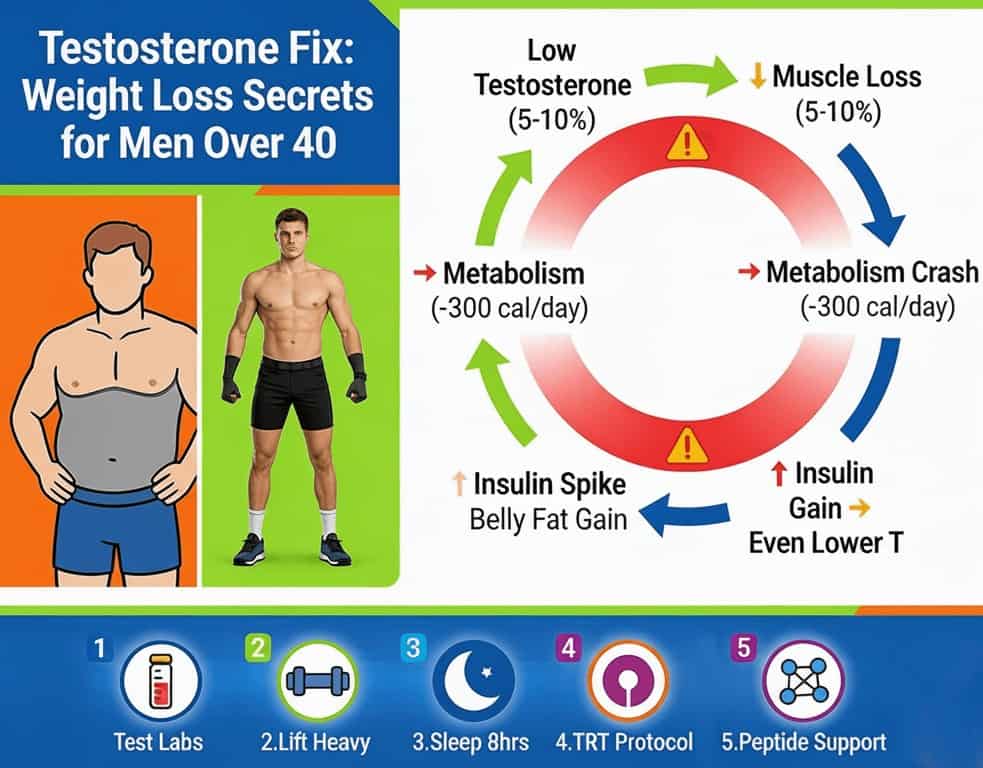
2:Testosterone Declines:
Testosterone is directly tied to muscle synthesis and metabolic rate. After 30, men’s testosterone naturally drops by approximately 1–2% per year.
By 40, many men are operating at testosterone levels 10–20% lower than their peak years — which slows muscle growth, accelerates fat storage (especially visceral belly fat), and quietly lowers the metabolic rate.
3: NEAT Drops Without You Noticing
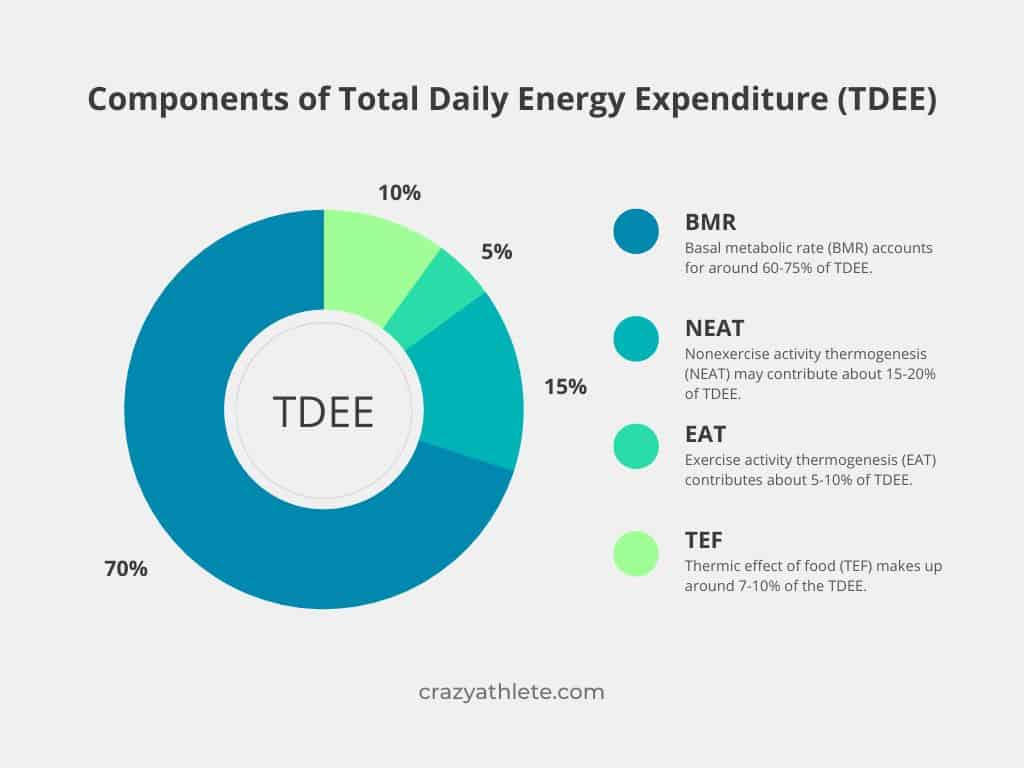
NEAT (Non-Exercise Activity Thermogenesis) is all the movement that isn’t formal exercise — walking, fidgeting, standing, household tasks.
Research shows NEAT can account for up to 2,000 calories of difference between two people of the same size. As men age, NEAT typically drops due to more sedentary careers, more desk time, and less spontaneous movement.
This is a massive and often invisible contributor to the calorie decrease with age in men.
4: Metabolic Adaptation From Years of Dieting
Many men in their 40s have spent years cycling through diets. Each prolonged calorie deficit triggers metabolic adaptation — the body becomes more efficient at running on fewer calories, which means your TDEE shrinks beyond what your age and muscle loss alone would predict.
How Much Does TDEE Decrease After 40 in Men? (With Real Numbers):
To understand the TDEE men over 40 calorie decrease with age in real terms, here’s a practical comparison using the Mifflin-St Jeor equation — the most validated formula for estimating TDEE — for the same man at different ages with a lightly active lifestyle:
| Age | Weight | Height | Activity Level | TDEE Estimate |
|---|---|---|---|---|
| 30 | 85 kg | 178 cm | Lightly Active | ~2,650 cal/day |
| 40 | 85 kg | 178 cm | Lightly Active | ~2,590 cal/day |
| 50 | 85 kg | 178 cm | Lightly Active | ~2,540 cal/day |
Note: This assumes no change in weight or activity level. In reality, activity often drops and body composition shifts toward more fat and less muscle, which accelerates TDEE decline.
The age factor in the Mifflin-St Jeor formula subtracts 5 calories per year of age for men. That’s approximately 50 calories per decade at the formula level alone — before factoring in the muscle loss and NEAT reduction that accompany aging.
The combined real-world effect is often much larger: 150–350 fewer calories burned daily by age 45 compared to age 30.
🔗 Want to understand the full formula behind this? Read our deep-dive: TDEE Calculator Formula: How to Calculate Total Daily Energy Expenditure
What Is a Good TDEE for a Man Over 40?
Understanding TDEE men over 40 calorie decrease with age starts with knowing what a realistic number looks like for your lifestyle. There is no single “good TDEE” — it depends on your height, weight, body composition, and activity level. But here are realistic reference ranges for men over 40:
| Lifestyle | TDEE Range (Men 40–55) |
|---|---|
| Sedentary | 1,900 – 2,200 cal/day |
| Lightly Active | 2,200 – 2,600 cal/day |
| Moderately Active | 2,600 – 3,000 cal/day |
| Very Active | 3,000 – 3,400+ cal/day |
If you’re eating above your TDEE range and not losing weight — or eating below it and still not losing — your activity level selection is likely off.
🔗 See how your TDEE compares to the average: What Is a Good TDEE? (Average by Age, Gender & Goal)
How to Recalculate Your TDEE Correctly After 40:
One of the biggest mistakes men over 40 make is using an old, outdated TDEE number. Here’s the right approach:
Step 1: Use a Mifflin-St Jeor Based Calculator
The Mifflin-St Jeor equation — the one used on DailyTDEE.online — is the formula recommended by the American Dietetic Association for estimating resting metabolic rate in healthy adults.
It accounts for your current age automatically, so the older you are, the lower your calculated BMR. This is the most honest starting point.
🔗 Calculate your current TDEE now: Free TDEE Calculator — DailyTDEE.online
Step 2:Be Brutally Honest About Activity Level
Most men over 40 overestimate how active they are. If you have a desk job and hit the gym 3x/week, you are lightly to moderately active — not “very active.”
Choosing the wrong activity level is the #1 reason TDEE calculations feel inaccurate.
Step 3: Recalculate Every 4–6 Weeks
Your TDEE is not a set-it-and-forget-it number. As your weight, muscle mass, and lifestyle change, so does your TDEE. Recalculate regularly — especially if you’re losing fat (which lowers your TDEE) or gaining muscle (which raises it).
How to Work With a Lower TDEE — Not Against It:
Knowing your TDEE is just step one. Here’s how men over 40 can use that number effectively:
1: Create a Moderate Deficit — Not an Aggressive One
A deficit of 300–500 calories below your TDEE is the sweet spot for sustainable fat loss without triggering metabolic slowdown or muscle loss.
Crash diets that slash 800–1,000 calories below TDEE accelerate muscle loss, tank testosterone further, and make the problem worse.
🔗 Find your ideal calorie deficit: How Many Calories to Lose Weight? Your Ultimate Guide to Sustainable Fat Loss
2: Prioritize Protein to Protect Muscle
Men over 40 need 0.7–1g of protein per pound of bodyweight to maintain muscle mass while in a calorie deficit. Higher protein also has a greater thermic effect — meaning your body burns more calories just processing it.
This effectively “raises” your functional TDEE without any additional exercise.

3: Resistance Training Is Non-Negotiable
The most effective way to combat TDEE men over 40 calorie decrease with age is to rebuild and maintain lean muscle mass through resistance training.
Every pound of muscle you add increases your BMR and raises your TDEE. Even 2–3 sessions of progressive overload training per week can meaningfully offset the metabolic decline of aging.
4: Increase NEAT — It Adds Up Fast
If formal exercise feels limited by time or joint issues, increasing NEAT is highly effective. Adding a 20-minute walk after dinner, using stairs, and standing for part of your workday can add 200–400 calories of daily burn without a single gym session.
5: Track and Adjust Every 3 Weeks
Use your calculated TDEE as your starting estimate. Track your weight for 3 weeks. If you’re not trending in the right direction, adjust by 100–150 calories and repeat. This real-world calibration beats any formula.
🔗 Understand the difference between BMR and TDEE before you start tracking: TDEE vs BMR: Which Number Actually Matters for Weight Loss?
TDEE for Men Over 40 vs. Men in Their 30s — Side-by-Side Comparison:
The TDEE men over 40 calorie decrease with age becomes clearest when you compare the two age groups directly across all major factors:
| Factor | Men in Their 30s | Men Over 40 |
|---|---|---|
| Average TDEE | 2,500–3,000 cal/day | 2,200–2,800 cal/day |
| Muscle Mass | Higher | 5–15% Lower |
| Testosterone | Higher | 10–20% Lower |
| Recovery Time | Faster | Slower |
| Protein Needs | 0.6–0.8g/lb | 0.8–1g/lb |
| TDEE Recalc Frequency | Every 6–8 weeks | Every 4–6 weeks |
How Many Calories Should a Man Over 40 Eat to Lose Weight?
Because of the TDEE men over 40 calorie decrease with age, the margin for error is smaller than it was in your 30s. To lose fat sustainably, eat 300–500 calories below your TDEE.
For the average moderately active 45-year-old man with a TDEE of around 2,700 calories:
- Weight loss target: 2,200 – 2,400 calories/day
- Expected rate: 0.5–1 lb of fat loss per week
Do not go below 1,800 calories as a man, as this increases muscle loss, hormonal disruption, and metabolic adaptation risk.
🔗 See the science behind weekly fat loss targets: How Many Calories to Lose 1 Pound a Week: The Complete Science-Backed Guide
Frequently Asked Questions:
1:How much does TDEE decrease with age in men?
2:Why can’t I lose weight eating the same as I did in my 30s?
3:Should men over 40 eat fewer carbs to lose weight?
4:Should men over 40 eat fewer carbs to lose weight?
5:How often should a man over 40 recalculate his TDEE?
Conclusion:
Your TDEE isn’t broken after 40 — it’s just different. The TDEE men over 40 calorie decrease with age is real, driven by muscle loss, hormonal shifts, reduced NEAT, and the accumulated effects of years of dieting.
But different doesn’t mean worse. Men who understand their changing TDEE and adapt their nutrition and training accordingly often get in the best shape of their lives in their 40s and 50s.
The first step? Know your number.
🔗 Calculate your TDEE right now — free, instant, no email required: 👉 DailyTDEE.online Free TDEE Calculator
Eat at the right number. Train to preserve muscle. Adjust every few weeks. That’s the entire system — and it works at any age.