
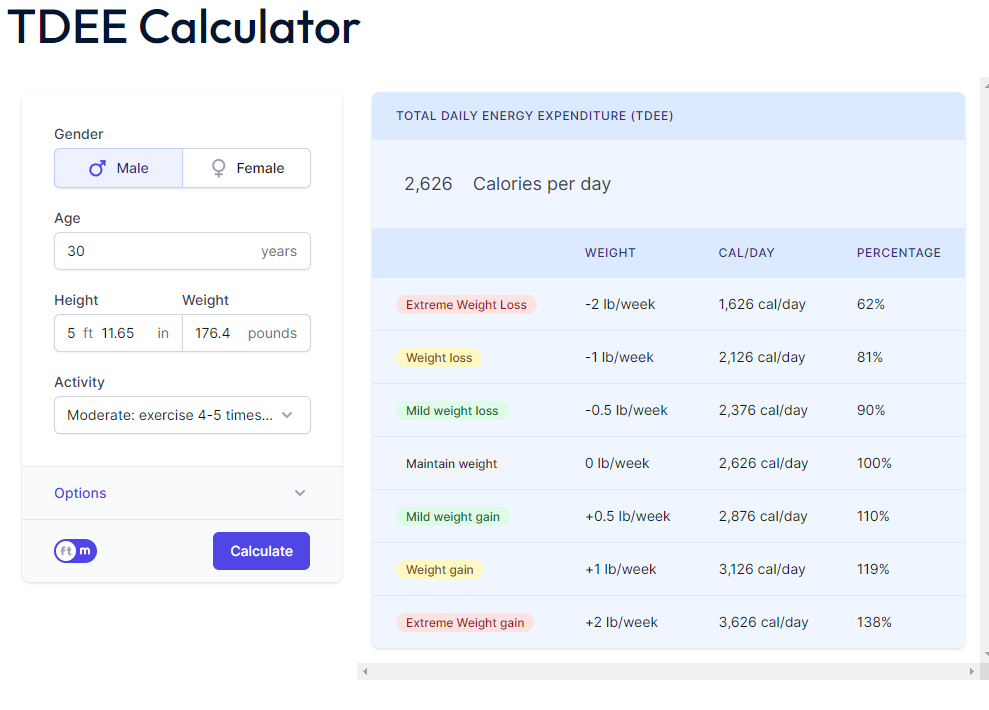
You punched your numbers into a TDEE calculator, followed the calorie plan religiously for weeks — and nothing happened. Sound familiar? The problem might not be your discipline. It could be inaccurate TDEE calculator results misleading you from the start.
In this guide, we break down exactly why TDEE calculators get it wrong, what factors they miss, and how you can get a more accurate estimate to finally hit your goals.
Table of Contents
What Is TDEE and Why Does It Matter?
Total Daily Energy Expenditure (TDEE) is the total number of calories your body burns in a day — including your basal metabolic rate (BMR), physical activity, and the thermic effect of food.
When your TDEE calculation is off, every calorie target built on top of it is also off. That’s why inaccurate TDEE calculator results are one of the most overlooked reasons people plateau on their fitness journey.
Top Reasons Your TDEE Calculator Results Are Inaccurate:
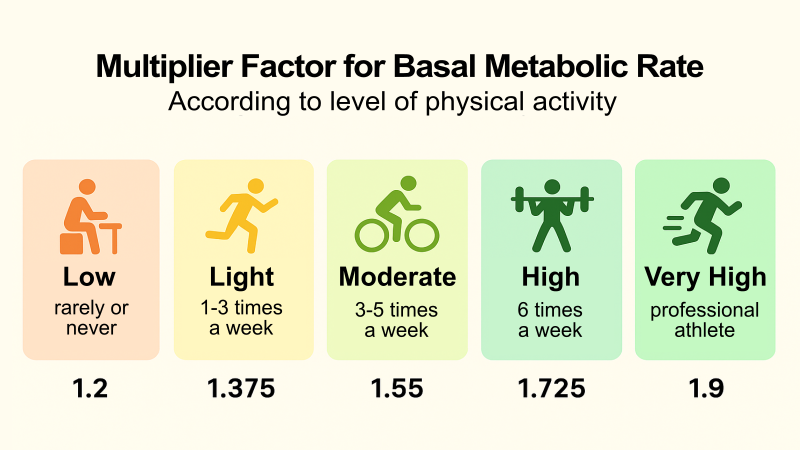
1:You’re Using the Wrong Activity Multiplier
Most TDEE calculators ask you to self-report your activity level — sedentary, lightly active, moderately active, etc. But studies consistently show that people overestimate how active they are.
Choosing “moderately active” when you’re mostly desk-bound can inflate your TDEE by 200–400 calories per day.
✅ Fix: When in doubt, choose one level lower than you think you are, and adjust based on real results.
2:Generic BMR Formulas Don’t Account for Body Composition:
The most popular formulas — Mifflin-St Jeor and Harris-Benedict — estimate your BMR using only height, weight, age, and sex. They do not account for muscle mass vs. fat mass.
Two people at the same weight can have a 300+ calorie difference in BMR if one has significantly more lean muscle.
✅ Fix: Use the Katch-McArdle formula if you know your body fat percentage — it’s more accurate for athletes and lean individuals.
3:NEAT Is Impossible for Calculators to Measure:
Non-Exercise Activity Thermogenesis (NEAT) — the calories burned through fidgeting, walking around your home, housework, and general movement — varies wildly between people and cannot be accurately captured by any standard TDEE formula.
This single factor can account for up to 700 calories difference between two individuals with the same stats.
✅ Fix: Track your steps with a wearable device and cross-reference it with your calculated TDEE.
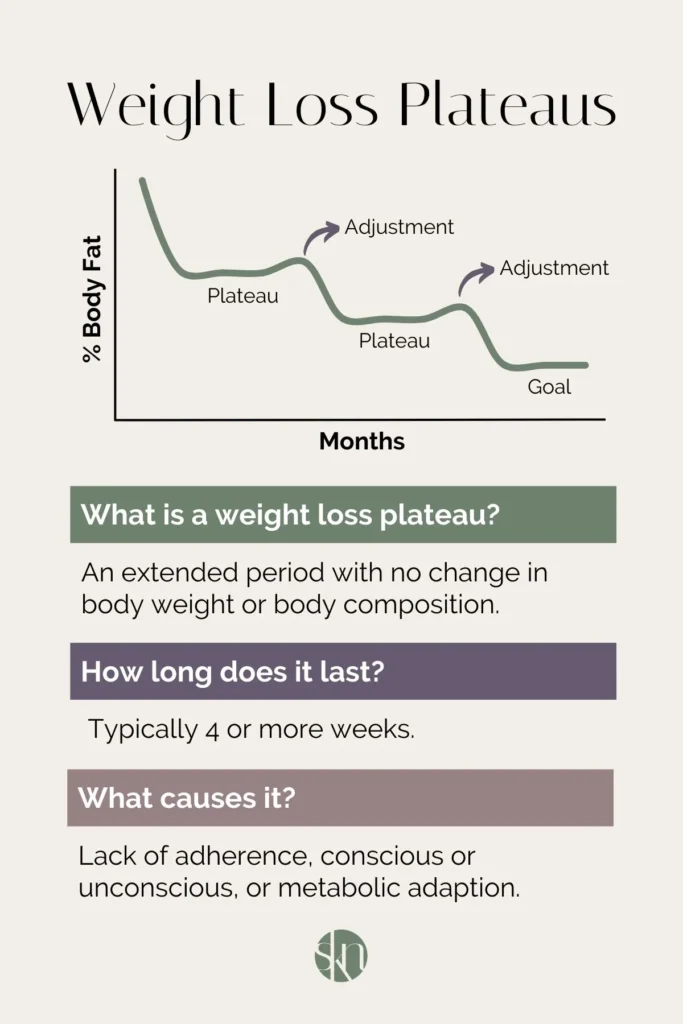
4:Metabolic Adaptation After Dieting:
If you’ve been in a calorie deficit for a long time, your body down-regulates metabolism — a process called adaptive thermogenesis. Your actual TDEE may now be 10–15% lower than what any calculator predicts.
This is why you can eat “at maintenance” and still gain weight after a prolonged diet.
✅ Fix: Take diet breaks and periodically recalculate your TDEE based on real-world intake vs. weight change over 2–4 weeks.
5:Hormonal Imbalances and Medical Conditions:
Conditions like hypothyroidism, PCOS, insulin resistance, and chronic stress elevate cortisol — all of which can significantly lower your actual metabolism below what any calculator estimates.
If you’re doing everything right and still not seeing results, this is worth investigating with a healthcare provider.
✅ Fix: Get bloodwork done. A doctor can identify if a hormonal issue is causing your TDEE to be chronically misrepresented.
6:Inaccurate Calorie Tracking — The Other Side of the Equation:
Even if your TDEE is spot-on, underreporting calorie intake is one of the most documented phenomena in nutrition science. Research shows people underestimate their food intake by 20–50%.
This compounds with inaccurate TDEE calculator results to create a double-error problem.
✅ Fix: Use a food scale instead of volume measurements, and log every bite — including sauces, oils, and drinks.

How to Get a More Accurate TDEE — The Real-World Method:
Instead of relying 100% on a formula, use this empirical method:
- Track your food intake accurately for 2 weeks without changing anything
- Record your weight daily and average it weekly
- Compare intake vs. weight change:
- If weight is stable → your average intake = your true TDEE
- If weight is rising → your true TDEE is lower than your intake
- If weight is falling → your true TDEE is higher than your intake
This method accounts for all the variables that standard calculators miss.
Which TDEE Calculator Formula Is Most Accurate?
| Formula | Best For |
|---|---|
| Mifflin-St Jeor | General population, no body fat data |
| Harris-Benedict | Older, classic estimate |
| Katch-McArdle | Athletes, those who know body fat % |
| Cunningham | Bodybuilders, high lean mass individuals |
Which TDEE Formula Is Most Accurate for You?
FAQs About Inaccurate TDEE Calculator Results:
1: Why is my TDEE calculator giving me different results on different sites?
2: Can a TDEE calculator be wrong by 500 calories?
3: How often should I recalculate my TDEE?
4: Is TDEE the same as maintenance calories?
5: Should I trust wearable devices for TDEE?
Conclusion — Stop Blaming Yourself, Fix Your Numbers:
If your progress has stalled, the issue might not be willpower — it might be inaccurate TDEE calculator results built on formulas that can’t capture your unique biology, lifestyle, or metabolic history.
Use online calculators as a starting point, then dial in your true TDEE through real-world tracking. Small adjustments based on evidence will always outperform any formula.
Ready to stop guessing? Use our Free TDEE Calculator to get your personalized calorie estimate — then apply the real-world method above to fine-tune it for your body. 👉 Calculate My TDEE Now →